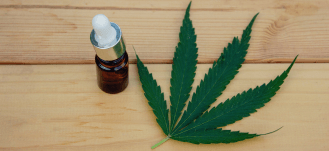


To get a prescription, please schedule your telemedicine appointment with one of our licensed healthcare providers. They can evaluate your needs and, if suitable, issue a medical cannabis prescription during the virtual consultation.
Find answers
Search every page and article on our site, or start with a popular topic.

Hill Family Cannabis, a division of Hill Family Medicine, offers medical cannabis prescriptions for patients eligible under Texas’ Compassionate Use Program. Led by Dr. Matthew Hill, an Osteopathic Physician with extensive family medicine experience, our practice provides natural, evidence-based treatments to improve the lives of individuals managing chronic and debilitating conditions.
Through Texas’s Compassionate Use Program, we are able to offer safe, legally compliant medical cannabis treatment options tailored to the unique health needs of our patients. At Hill Family Cannabis, we are dedicated to staying informed on the latest research and developments in medical cannabis, ensuring that our patients receive comprehensive care and education about their treatment options.
Our practice fosters a supportive, patient-centered environment, grounded in trust and transparency, with a mission to enhance the well-being and quality of life of every individual we serve.
At Hill Family Cannabis, we believe in care backed by science and compassion. Proudly serving patients across Texas by telemedicine, our physician practice is often found by people searching for a “medical dispensary in Austin.” We aren’t a dispensary: we evaluate patients and, when appropriate, write prescriptions that are filled at state-licensed dispensing organizations. A prescription through the Compassionate Use Program is a legal, physician-supervised alternative to unregulated gas station or vape shop THC products. Our office is at 11420 Bee Caves Rd Suite A-150, Austin, TX, 78738.
Texas residents living with qualifying conditions—including PTSD, a condition that causes chronic pain, spasticity, cancer of any kind, epilepsy, traumatic brain injury, Crohn’s disease and more—may be eligible for a prescription under the Texas Compassionate Use Program (TCUP). Unlike unregulated THC products, TCUP products are made by state-licensed dispensing organizations, prescribed by a registered physician and dosed in measured amounts (no more than 10 mg of THC per dose). Our mission is to help Texans understand their options, be evaluated by a physician registered in the Compassionate Use Registry of Texas (CURT), and, if cannabis is a good fit, use it as one part of a thoughtful treatment plan.
Rules for store-bought hemp THC keep changing: Texas now limits hemp THC sales to adults 21 and older, delta-8 and similar products are being treated as Schedule I controlled substances in Texas, and a federal hemp law taking effect December 11, 2026 will remove most intoxicating hemp products from shelves. That makes it more important than ever to choose regulated, compliant options. At Hill Family Cannabis, we’re committed to helping Texans navigate this evolving landscape and avoid unregulated THC products that may pose unknown risks.
We are not a dispensary—we’re a physician practice and a compassionate partner in your care. Whether you’re managing chronic pain, PTSD, a neurological condition or the effects of cancer treatment, our team is here to help you understand the treatment options available under Texas law.
Take the first step—explore whether medical cannabis may be a fit for you, legally and responsibly, in the Lone Star State.
At Hill Family Cannabis, we genuinely care about how plant-based medicine fits into modern healthcare, and we’re focused on the potential benefits medicinal cannabis can offer.

Understand if you meet the qualifying conditions under Texas's Compassionate Use Program.

Schedule a telemedicine appointment to see if you qualify for a medical cannabis prescription under Texas's Compassionate Use Program.

If Dr. Hill determines you qualify, your prescription is entered in the Compassionate Use Registry of Texas (CURT). You can fill it at any state-licensed dispensing organization.
Below are some of the conditions that may qualify you for a prescription in Texas. The full list also includes autism, traumatic brain injury, Crohn’s disease or other inflammatory bowel disease, incurable neurodegenerative diseases, and terminal illness or hospice or palliative care. Qualifying depends on your diagnosis and your physician’s evaluation.

ALS qualifies under Texas law. Some patients report that cannabis may help with muscle spasticity, pain, appetite and sleep, though research in ALS is limited.

Epilepsy and other seizure disorders qualify. Clinical trials of a prescription CBD medicine found fewer seizures in certain severe childhood epilepsies; results vary from person to person.

Chronic pain may qualify when it comes from an ongoing medical condition, has lasted more than 90 days and hasn’t been relieved by standard pain treatment. Some studies suggest cannabis may modestly ease some chronic pain, such as nerve pain.

Any cancer diagnosis qualifies, not only terminal cancer. Cannabis may help some patients with chemotherapy-related nausea, pain or poor appetite; it is not a treatment for the cancer itself.

Multiple sclerosis qualifies. Some studies suggest cannabis may ease MS-related muscle spasticity and pain for some patients; effects vary.

PTSD qualifies. Some patients report better sleep and fewer symptoms, but research is mixed, and cannabis works best alongside therapy and other proven care.

Physician Family Medicine
Dr. Matthew Hill, DO, is a dedicated osteopathic physician in Austin, Texas, who integrates medical cannabis into his family medicine practice to enhance patient care. After earning his Doctor of Osteopathic Medicine degree from the University of North Texas in 2005 and completing his family medicine residency in Austin, Dr. Hill offers medical cannabis as an option for patients with qualifying conditions such as chronic pain, PTSD and neurological conditions.
His patient-centered approach ensures tailored, compassionate care, making medical cannabis accessible across Texas through his practice, Hill Family Medicine. Dr. Hill is committed to careful, personalized treatment that helps his patients toward better health.
Medical marijuana in Texas, part of the Texas Compassionate Use Program, contains plant-based cannabinoids like CBD and THC, which are structurally similar to our body’s own cannabinoids. These cannabinoids interact with the endocannabinoid system, a cell-signaling network involved in many functions. Research is still developing; areas being studied include:
Some patients report relief from anxiety, mood and PTSD symptoms, although responses vary and cannabis can also worsen anxiety in some people. PTSD qualifies under Texas law; anxiety or depression alone does not.
Cannabis shows potential in reducing muscle spasms and stiffness, particularly in conditions like multiple sclerosis (MS) and spinal cord injuries.
Spasticity is a qualifying condition under the Texas Compassionate Use Program.
THC-based medicines may help reduce nausea and vomiting for some patients, particularly during chemotherapy.
In clinical trials, a prescription CBD medicine reduced seizures for some patients with Dravet syndrome and Lennox-Gastaut syndrome. Results vary, and cannabis does not replace other seizure care.
Some studies suggest cannabis may modestly reduce some types of chronic pain, especially nerve (neuropathic) pain. Evidence for other conditions, such as arthritis and migraine, is more limited.
THC can increase appetite, which may help some patients with appetite loss from cancer or its treatment.
Lab studies suggest cannabinoids have anti-inflammatory effects. Some people with inflammatory bowel disease report symptom relief, but studies have not shown that cannabis reduces the underlying inflammation.
Early laboratory research is exploring whether cannabinoids protect nerve cells. Cannabis has not been shown to slow diseases such as Alzheimer’s or Parkinson’s, though it may help some symptoms.
Sleep Aid – While effects may vary, cannabis may enhance sleep quality and duration for some individuals.
It’s crucial to recognize that the efficacy of medical cannabis varies based on individual factors such as the specific condition, type, and dosage of cannabis used. Additionally, Dr. Hill underscores the importance of considering potential risks, including side effects such as drowsiness, dizziness and impaired coordination, medication interactions, and the risk of dependency or misuse.
The Compassionate Use Program, initially limited to patients with intractable epilepsy, now includes epilepsy and seizure disorders, multiple sclerosis, spasticity, ALS, autism, cancer, incurable neurodegenerative diseases, PTSD, chronic pain, traumatic brain injury, Crohn’s disease and other inflammatory bowel disease, and terminal illness or hospice or palliative care. To explore further or discuss personalized treatment options, individuals are encouraged to schedule an appointment with Dr. Matthew Hill at Hill Family Medicine.
Get in touch to see if medical cannabis is right for you.
Our practice fosters a supportive, patient-centered environment, grounded in trust and transparency.
Follow Us:
Quick Links
Other Links
Contact Information
Address:
11420 Bee Caves Rd Suite A-150 Austin, TX 78738
Monday - Friday
8:00 AM - 5:00 PM
Join Our Newsletter
© Copyright 2025 Hill Family Medicine